
June 7, 2026: Public History
- Judy
- Jun 7
- 2 min read

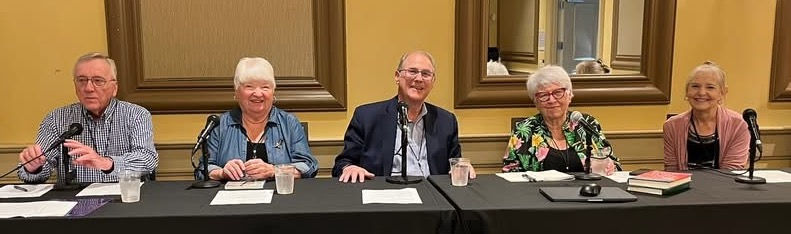
Last weekend I had the privilege of being part of a panel for a session at the Florida Historical Society’s Annual Public History Forum.
For those unfamiliar with the term, Public History is “the practice of applying historical methods and skills outside of traditional academic settings, engaging the public through museums, archives, historic preservation, and digital projects”.
While I admit to being a history-geek, this is powerful stuff for all of us. Helping people understand the relevance that history has in our lives, highlighting events from the past that have impacted our current path, digging into the personal lived experiences of the past- these are things that allow us to more deeply understand life.
I would also venture to say that the mission of Public History is even more critical now. If this last decade of political turmoil and crisis has taught us anything, it is that unless citizens stay civically informed and engaged, our democracy will not survive. That if we are not vigilant protectors of the past, both the good and the bad, it can be exploited, twisted, and erased. And once that foundation on which today rests is gone, societies and cultures become irrelevant. And people and groups become much more susceptible to manipulation.
Current events do not live in a vacuum. Knowing and understanding the past gives us power and informs the choices we make today. Perhaps that is why groups that are trying to undermine our democracy are also pushing to have universities eliminate courses and majors of study that focus on history and societies. This should alarm everyone. Because as we have experienced first-hand over this last decade, even if a portion of the population can be manipulated, it can have dire effects.
The good news is that according to data collected by Book Tribe, history and biographies are preferred by 30-35% of readers in this country. This puts it in the number three spot for preferred genre of readers.
Our panel discussion focused on historical fiction as a genre and it was such a lively and engaging discussion. We talked about the power of historical fiction in helping readers more deeply understand time periods. We chatted about the delicate balance between historical accuracy and artistic license. Less a presentation, it was an interaction between and among the panel and the audience.
More than anything though, it was good for my soul to be surrounded by people who were curious, insightful, and deep and critical thinkers.


Comments